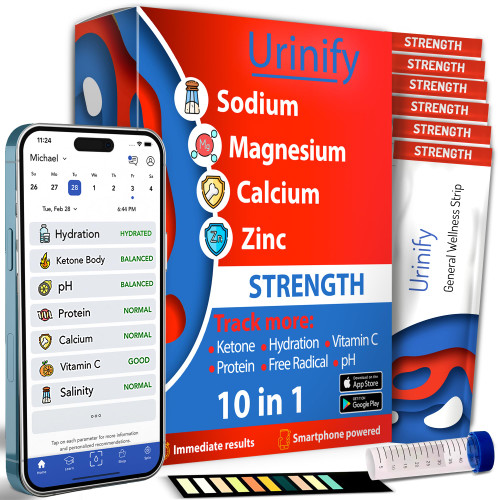
Product Overview
Brand: HEALTHMATE
Features:
- MONITOR YOUR SALT INTAKE Quickly check whether your sodium intake may be higher than recommended using a simple urine test.
- RESULTS IN JUST 60 SECONDS Easy-to-read colour chart with no laboratory equipment required.
- SIMPLE DIP TEST No complicated preparation—just dip, wait and compare the colour.
- 10 INDIVIDUAL TESTS Enough strips for ongoing monitoring over several weeks.
Details: Salt is a chemical compound (electrolyte) made up of sodium and chloride. It is commonly used to preserve and flavour foods, and is the main source of sodium in our diet. A small amount of salt is important for good health as it helps to maintain the correct volume of circulating blood and tissue fluids in the body. However, most people consume much more sodium than they need for good health. The kidneys are the main regulators of sodium levels in the body. Too much sodium can cause high blood pressure and many other health conditions. On the other hand, if sodium levels drop too low, the hormone aldosterone is released and this increases the amount of sodium held in the body by reducing the amount lost in urine. Excessive sodium loss is very rare, but low sodium levels in the body can be dangerous if not treated. The scientific literature linking sodium intake to blood pressure is extensive and dates back more than 100 years. Populations with a high average salt intake have a higher average blood pressure and higher levels of hypertension (high blood pressure). People with high blood pressure, diabetes or chronic kidney disease and those who are older or overweight are particularly susceptible to the effect of too much sodium on blood pressure. Reducing the amount of salt you have will lower high blood pressure – the extent depends on your age, current blood pressure and other factors such as the amount of exercise you do, body weight, stress and alcohol intake. There is strong evidence that sodium reduction lowers blood pressure in people with normal blood pressure and good evidence that consuming a diet low in sodium reduces blood pressure in children.